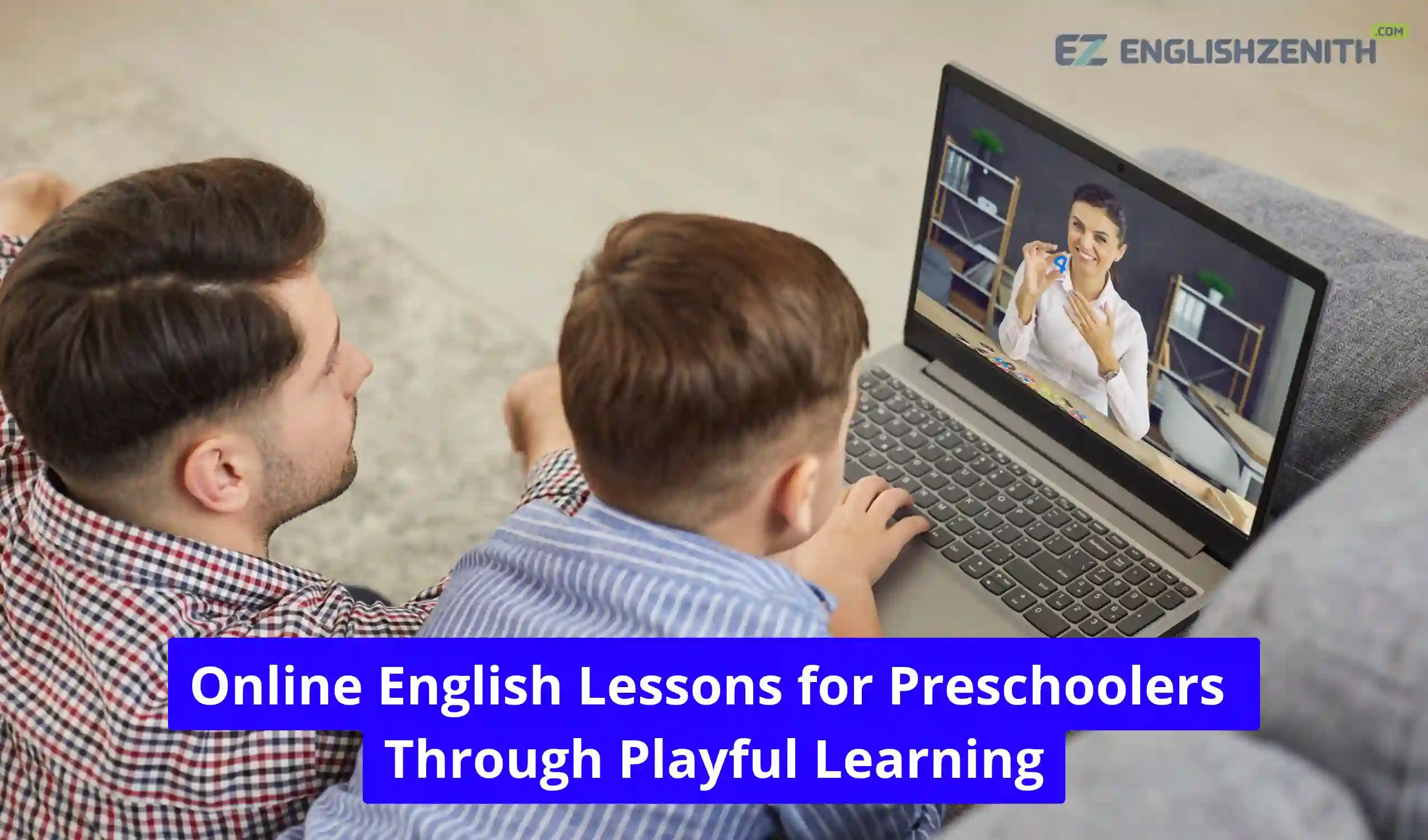
Online English Lessons for Preschoolers through playful activities, songs, stories, and interactive games that build vocabulary, confidence, and early communication skills.
Why Home Activities Can Support Early English Learning
Learning English does not have to feel like a formal lesson. For preschoolers, familiar activities such as singing, drawing, sorting toys, and looking at picture books can create meaningful opportunities to hear and use English.
Parents do not need complicated materials or advanced language skills to get started. A few minutes of playful interaction can help children become familiar with common words, sounds, and expressions while enjoying time with their families.
The key is to make English part of an enjoyable routine rather than another task to complete. Children are more likely to participate when they feel comfortable, curious, and free to explore at their own pace.
Online resources can make these experiences easier to organise. Short videos, digital picture books, songs, and guided activities can provide inspiration, while parents help children connect what they see on a screen with the real world around them.
How to Choose the Right English Activities for Preschoolers
Preschoolers develop language at different rates. Some children enjoy repeating new words, while others prefer listening, observing, moving, or responding through gestures before speaking.
For this reason, choose activities that suit your child’s interests and current abilities. A child who loves animals may respond well to animal sounds and picture cards, while a child who enjoys movement may prefer action songs and simple instructions.
Keep each activity short enough to maintain interest. You can begin with five to ten minutes and adjust the duration according to your child’s attention and enthusiasm.
It is also helpful to repeat familiar activities regularly. Repetition gives children more opportunities to recognise words and understand their meaning without needing to memorise long lists.
Parents who want additional guidance can explore personalised English lessons online to understand how individual learning needs can shape a child’s English learning experience.
Sing English Songs With Simple Actions
Songs are a natural starting point because they combine rhythm, repetition, sounds, and movement. Children can enjoy the music before they understand every word, making songs a low pressure way to introduce English.
Choose songs with simple vocabulary and clear actions. Songs about greetings, colours, numbers, body parts, or animals are particularly useful because children can connect the words with something they can see or do.
You can sing together, clap to the rhythm, point to body parts, or act out the lyrics. If you use an online video, watch it together and pause occasionally to repeat a word or perform an action.
For example, after singing a song about animals, ask your child to identify a cat, dog, or bird in a picture book. This small extension helps connect the language from the song with familiar objects.
Do not worry if your child does not sing the complete lyrics. Listening, moving, smiling, and attempting one familiar word can all be valuable forms of participation.
Explore Colours With Objects Around the House
Colour activities help children connect English words with visible features in their environment. They also encourage observation, movement, and simple conversations without requiring worksheets or special equipment.
Begin with two or three familiar colours. Find objects around the home and name each one clearly. You might say, “This is a red ball” or “Look at the blue cup.”
Invite your child to find another object with the same colour. If they bring you a yellow toy, acknowledge the effort and repeat the word naturally. There is no need to turn every response into a test.
You can also use an online colouring activity as inspiration. Let your child choose a picture, then talk about the colours while drawing together on paper.
As your child becomes familiar with individual colour words, introduce short phrases such as “green leaf” or “pink flower.” These examples show how English words can work together in simple expressions.
The objective is not to teach every colour at once. It is to create enjoyable opportunities to notice, hear, and use a few useful words repeatedly.
Make Everyday Objects Part of English Play
One of the easiest ways to practise English is to use objects that children already know. Toys, clothes, food containers, books, and household items can become learning materials without changing the family’s daily routine.
Choose a small group of objects and name them during play. For example, place a spoon, cup, toy car, and teddy bear on a table. Say each word while pointing to the corresponding object.
Next, invite your child to choose an item. You can ask, “Where is the teddy bear?” or “Can you find the spoon?” If your child is not ready to answer verbally, pointing or picking up the correct object is a perfectly reasonable response.
You can make the activity more interactive by giving simple instructions. Try phrases such as “Put the car here” or “Give me the cup.” Demonstrate the action when necessary so the meaning remains clear.
Everyday play also creates opportunities to model short sentences. Instead of asking children to repeat isolated vocabulary repeatedly, describe what is happening in a natural way.
For example, when a child picks up a toy car, say, “You have a blue car.” The child can listen and respond without feeling pressured to produce a complete sentence immediately.
Read Digital Picture Books Together
Digital picture books can introduce new vocabulary through illustrations, repetition, and simple storylines. They also give parents an opportunity to connect English words with characters, objects, and actions.
Choose stories with clear pictures and a manageable amount of text. Books about family life, animals, bedtime, food, or familiar routines can be easier for preschoolers to follow than complicated stories.
Before reading, look at the cover together. Point to a character or object and name it in English. During the story, pause occasionally to describe an illustration or ask a simple question.
For example, you might ask, “Where is the dog?” or “Is the rabbit happy?” You can answer the question yourself if your child remains quiet, keeping the experience relaxed and engaging.
After reading, invite your child to draw a favourite character or act out a moment from the story. This gives them another way to interact with the vocabulary they have heard.
Avoid stopping too frequently to explain every unfamiliar word. The overall experience should remain enjoyable, with enough repetition and visual context to support understanding.
Play a Simple English Treasure Hunt
A treasure hunt combines movement with language practice. It works particularly well for children who enjoy exploring, searching, and completing small challenges.
Choose three to five familiar objects and place them in safe, easy to reach locations. Start with simple instructions such as “Find the ball” or “Bring me a book.”
Show your child the objects before beginning so they understand what each word means. You can also use pictures if the objects are difficult to identify.
Once your child understands the activity, introduce slightly longer instructions. For example, “Find the red ball” combines an object word with a colour word. Another option is “Put the teddy on the chair,” which introduces a simple action and location.
Keep the instructions manageable. If a child looks confused, demonstrate what you mean or simplify the sentence instead of repeating it more loudly.
Celebrate participation rather than speed. The purpose is to connect English with movement and understanding, not to see how many instructions a child can complete.
Practise English Through Pretend Play
Pretend play gives children opportunities to explore language through familiar situations. They can become shopkeepers, chefs, doctors, teachers, or passengers while parents model useful expressions.
A pretend shop is an easy activity to organise at home. Arrange a few toys or pieces of pretend food and take turns being the customer and shopkeeper.
Start with short expressions such as “Hello,” “An apple, please,” and “Thank you.” You can model the conversation first, then allow your child to join with a word, gesture, or complete phrase.
A pretend kitchen offers another opportunity to introduce action words and food vocabulary. While preparing a pretend meal, you might say, “Cut the banana,” “Mix the soup,” or “Put it on the plate.”
Children do not need to remember every expression. Hearing the same phrases during repeated play helps them become familiar with the language in a meaningful context.
For parents seeking more structured speaking practice as children grow, online English speaking tutor support may offer a useful next step beyond informal activities at home.
Use Movement Games to Teach Action Words
Young children often enjoy learning through physical movement. Action games allow them to demonstrate understanding even when they are not ready to speak confidently.
Choose a few simple verbs, such as jump, clap, walk, sit, stand, and dance. Say each word while demonstrating the action so your child can connect the sound with the movement.
You can then turn the activity into a listening game. Give one instruction at a time and invite your child to perform it. As the words become familiar, alternate between actions to keep the activity interesting.
Another option is to use an English movement song and follow the instructions together. This combines listening practice with music and physical engagement.
Be mindful of the available space and choose movements that are safe for your child’s age and environment. A small living room can be enough for clapping, stretching, or marching in place.
If your child becomes tired or distracted, switch to a quieter activity. Flexible pacing helps maintain positive associations with English learning.
Introduce Numbers Through Playful Counting
Counting activities help children hear English number words while interacting with objects. You can use building blocks, toy animals, crayons, fruit, or other safe items that are already available at home.
Begin with a small range of numbers that your child can manage comfortably. Count objects slowly while pointing to each one. For example, touch three blocks as you say “one, two, three.”
Let your child move the objects while you count together. This makes the relationship between the number word and the quantity easier to understand.
You can also count steps, toys, or pieces of clothing during everyday routines. The activity does not need a separate lesson period because ordinary moments can provide repeated exposure.
Avoid expecting perfect pronunciation straight away. A child may recognise the meaning of a number before being able to say it clearly.
As confidence develops, combine counting with other familiar vocabulary. You might count red blocks, three toy cars, or two teddy bears. These combinations provide natural opportunities to revisit words learned in earlier activities.
Create an English Routine Around Daily Life
Regular exposure can be more practical than occasional long sessions. A simple routine helps children recognise when English activities happen and gives parents predictable opportunities to practise familiar expressions.
You might sing a greeting song in the morning, name foods during snack time, read a picture book before bed, or use action words while tidying toys.
Choose moments that already fit comfortably into your family’s schedule. There is no need to turn every meal, bath, or outing into a language lesson.
Repeated expressions can be especially useful. Phrases such as “Good morning,” “Wash your hands,” “Let’s read a book,” and “Time to tidy up” connect English with meaningful daily experiences.
If your child hears the same phrase in a consistent situation, its meaning may gradually become easier to recognise. Over time, the child may begin responding through gestures, familiar words, or short expressions.
Parents can keep the routine flexible. When a child is tired, a song may be enough. On another day, there may be time for a longer story or a treasure hunt.
Make Screen Time Interactive and Balanced
Online resources can provide songs, stories, demonstrations, and new ideas for home activities. However, simply playing videos in the background does not always create meaningful interaction.
Whenever possible, watch or listen together. Pause to point at a picture, repeat a word, sing a phrase, or connect something on the screen with an object nearby.
For example, if a video introduces animals, you can find a toy animal or look at a picture book after watching. This helps move the experience from digital content into real world play.
Choose age appropriate material with clear language, suitable themes, and a manageable pace. Parents should remain involved in selecting content and supervising the child’s use of devices.
Balance screen based resources with movement, conversation, drawing, pretend play, and outdoor experiences where practical. The goal is to use technology as a source of ideas rather than allowing it to replace human interaction.
Children benefit from opportunities to respond, explore, and communicate with the people around them. A short shared activity can therefore be more useful than a long period of passive viewing.
How Parents Can Encourage English Without Pressure
Parents sometimes worry about pronunciation, grammar, or their own English ability. These concerns should not prevent them from introducing simple activities at home.
You can begin with words and expressions you feel comfortable using. Clear, repeated language is a practical starting point, and you can use reliable learning resources when you need ideas for songs, stories, or vocabulary.
Model the phrase you want your child to hear rather than correcting every mistake. If your child says, “Dog run,” you might respond, “Yes, the dog is running.” This gives a natural example without interrupting the child’s enthusiasm.
Allow time for listening. Some children observe an activity several times before attempting to speak, while others enjoy repeating words immediately. Neither response needs to be forced into a particular schedule.
Praise curiosity and participation. A child who points to the right picture, follows an instruction, or tries a new expression is engaging with the language in a meaningful way.
Parents can also vary activities according to interest. If a child loves songs but avoids picture cards, use music as the starting point and introduce vocabulary through the lyrics.
When Should You Consider Additional English Support
Home activities can provide valuable exposure, but some families may want additional structure as their child’s interests and abilities develop.
A tutor may help parents identify suitable learning goals, choose age appropriate materials, and introduce activities in a more organised sequence. Individual support can also offer opportunities for guided interaction beyond everyday family routines.
When exploring options, consider the child’s personality, attention span, interests, and comfort with online communication. Young learners generally need an encouraging approach that allows room for movement, repetition, and play.
English Zenith offers information about online English teachers and private English tutors online for families exploring more personalised learning support.
Parents can also learn about one on one English lessons online when considering an individual learning format. The most suitable choice depends on the child’s needs and the family’s goals, schedule, and preferences.
Additional support does not mean home activities should stop. Songs, stories, pretend play, and everyday conversations can continue to reinforce familiar language between guided learning sessions.
Frequently Asked Questions
What are the best online English activities for preschoolers at home
Simple activities include singing English songs, reading digital picture books, playing colour games, counting toys, and following movement instructions. The best choice depends on the child’s interests and developmental stage.
How long should preschoolers practise English at home
Start with a short activity of around five to ten minutes and observe your child’s response. Some children may enjoy longer sessions, while others benefit from several brief activities spread throughout the day.
Do parents need fluent English to help children learn
No. Parents can introduce familiar words, use songs and stories, and model short expressions. Reliable learning resources and guided support can help families who would like additional structure.
How can I help a child who does not want to speak English
Keep the experience relaxed and allow the child to listen, point, move, or respond through gestures. Model simple phrases without demanding immediate repetition, and choose activities that match the child’s interests.
Are online videos enough for preschool English learning
Videos can introduce vocabulary and provide useful demonstrations, but shared interaction adds important context. Parents can pause, discuss pictures, sing together, and connect digital content with physical objects and everyday experiences.
When can children start learning English at home
Families can introduce simple English experiences during the preschool years, adapting the activities to each child’s readiness and interests. There is no need to rush progress or expect every child to develop language at the same pace.
Make English Part of Your Child’s Everyday World
Helping a preschooler explore English at home does not require elaborate lesson plans. Songs, picture books, movement games, pretend play, and everyday conversations can create enjoyable opportunities to hear and use familiar language.
Start with one activity your child already enjoys and repeat it naturally throughout the week. Keep the experience encouraging, celebrate small attempts, and adjust the routine whenever your child needs a change.
If you would like guidance on choosing suitable English learning options for your child, contact English Zenith to discuss your family’s goals and explore an approach that fits your needs.