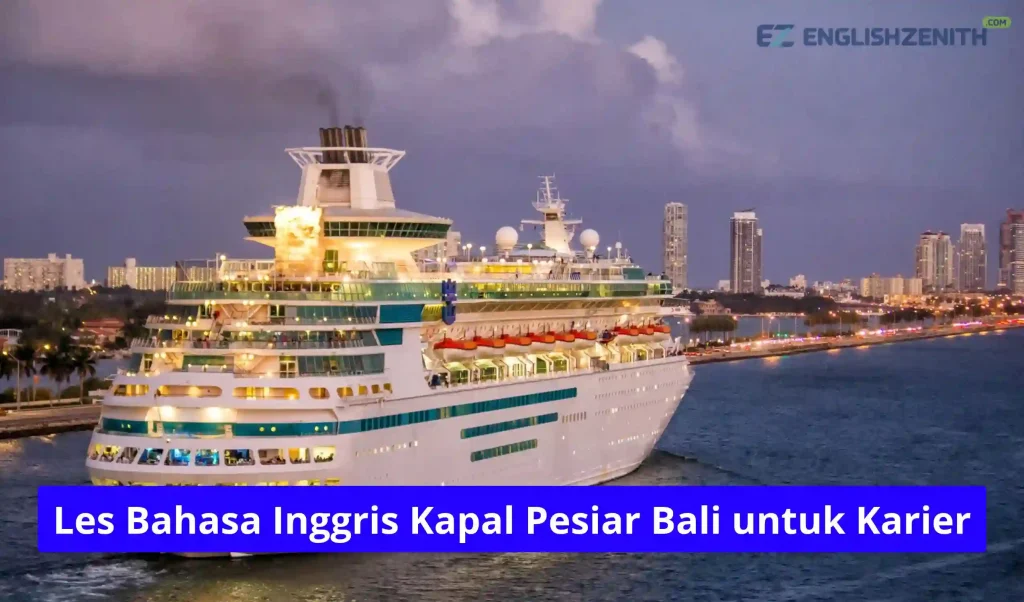
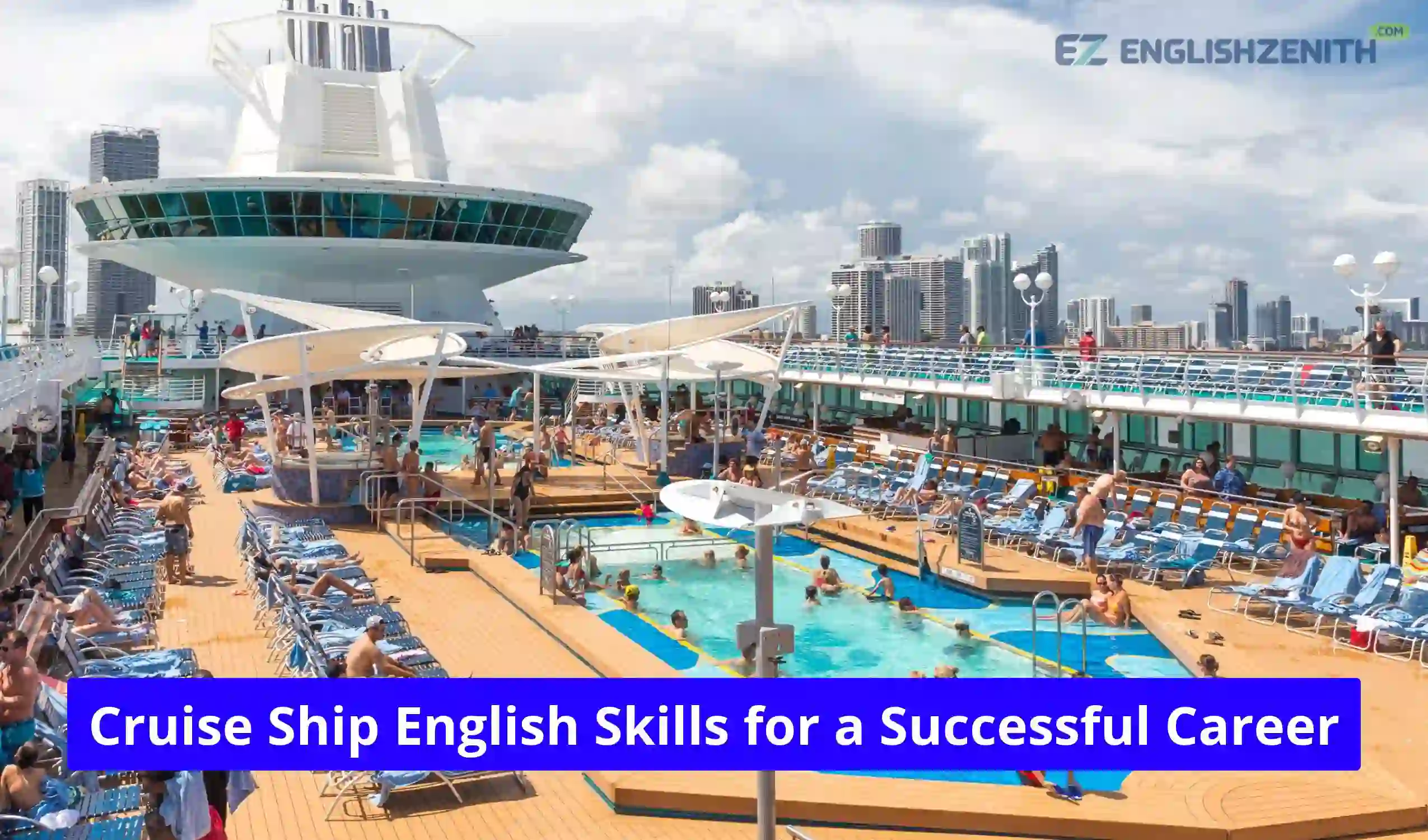
Cruise ship English helps aspiring crew members improve workplace communication, prepare for interviews, and build confidence for international hospitality careers.
Why Cruise Ship English Matters for Your Career
Working on a cruise ship offers an opportunity to explore different destinations, meet people from around the world, and develop valuable hospitality experience.
However, before you can pursue this career, you need to understand how English supports daily communication in an international workplace.
Cruise ship English focuses on the language skills you need to communicate with passengers, cooperate with colleagues, and handle professional responsibilities confidently.
Unlike general English lessons, workplace English preparation connects vocabulary and expressions with real situations.
For example, a restaurant crew member needs to understand guest requests, explain menu options, and respond politely to complaints.
Meanwhile, a housekeeping attendant needs to understand instructions, clarify room requirements, and communicate with supervisors.
English also plays an important role during recruitment. Employers may assess your ability to introduce yourself, describe your experience, answer interview questions, and explain how you would handle common workplace situations.
Therefore, developing practical communication skills can help you prepare for both the recruitment process and daily responsibilities on board.
The goal is not to speak with a perfect accent. Instead, you should aim to communicate clearly, understand different speakers, and respond appropriately in professional situations.
With consistent practice, you can build a stronger foundation for an international hospitality career.
What Is Cruise Ship English
Cruise ship English refers to the practical English skills that crew members use when working on passenger ships.
It combines everyday communication, hospitality vocabulary, workplace instructions, and professional expressions that help people perform their duties effectively.
Crew members often interact with passengers and colleagues from different countries. Consequently, they need language that works across different accents, communication styles, and cultural expectations.
For instance, a passenger might ask for directions, request assistance with luggage, or explain a problem with their cabin.
A crew member needs to understand the request and provide a helpful response. Even a short exchange can require careful listening, polite language, and clear pronunciation.
Cruise ship English also varies according to the department in which you work. Restaurant staff need food and beverage vocabulary, while housekeeping staff require expressions related to cleaning, room supplies, and guest requests. Reception staff may need to explain onboard services, answer questions, and resolve concerns.
Although each department has different responsibilities, all crew members benefit from strong listening skills, clear speaking, and the ability to communicate respectfully.
Essential English Skills for Cruise Ship Crew Members
Preparing for a cruise ship career involves more than memorising lists of words. You need to understand how people use English in practical situations and learn how to respond naturally.
English Speaking Skills for Daily Communication
Speaking clearly helps you communicate with passengers, supervisors, and fellow crew members. During a typical shift, you may need to answer questions, provide directions, confirm requests, or explain a procedure.
For example, a passenger might ask, “Could you tell me where the restaurant is?” You could respond, “Certainly. The restaurant is on Deck Five, just past the main lounge.”
Simple, direct sentences often work better than complicated expressions. Moreover, a polite tone helps create a positive impression, especially when you assist passengers who need information or support.
You should also practise asking follow up questions when you do not understand something. Expressions such as “Could you repeat that, please?” and “Would you mind explaining that again?” help you clarify information without guessing.
English Listening Skills for International Workplaces
Listening is essential because crew members receive instructions, respond to passenger requests, and coordinate tasks with colleagues. Misunderstanding a detail can lead to confusion, delays, or an unsatisfactory guest experience.
To improve your listening ability, practise understanding different English accents and speaking speeds. You can use recorded conversations, workplace dialogues, and hospitality videos to become more familiar with natural speech.
However, listening practice should involve more than recognising individual words. Try to identify the speaker’s main purpose, important details, and expected next action.
For example, when a supervisor explains a change in the work schedule, you need to understand the time, location, and task involved. If any information remains unclear, ask for confirmation before proceeding.
Cruise Ship English Vocabulary for Hospitality
Hospitality vocabulary helps you understand the expressions commonly used in guest services, food and beverage operations, housekeeping, and reception.
Restaurant staff may need words such as reservation, menu, ingredients, beverage, and bill. Housekeeping employees may use terms such as towels, amenities, cleaning supplies, and room service. Guest services staff may frequently discuss schedules, facilities, boarding information, and onboard activities.
Nevertheless, memorising individual words will not prepare you for every conversation. You should also learn how to use them in complete expressions.
For example, instead of learning only the word “reservation,” practise saying, “May I confirm your reservation?” Similarly, learn to use “amenities” in a sentence such as, “I can arrange additional bathroom amenities for your cabin.”
This approach connects vocabulary with practical communication and makes it easier to recall useful expressions when you need them.
Cruise Ship English for Different Job Positions
Each cruise ship department uses English in different ways. Understanding the language associated with your intended position allows you to prepare more effectively and practise situations that reflect your future responsibilities.
English for Restaurant and Food Service Staff
Restaurant employees regularly communicate with passengers about menus, dietary preferences, meal times, and service requests. Therefore, they need to explain options clearly and respond politely when guests ask questions.
Useful expressions include “Are you ready to order?”, “Would you prefer still or sparkling water?” and “May I check that information for you?”
Staff should also learn how to confirm important details. If a passenger mentions a food allergy or a special dietary requirement, the employee should follow the ship’s procedures and communicate the information accurately to the appropriate team.
Role playing can help you practise these conversations before entering the workplace. You can take turns acting as a passenger and a server, then review your vocabulary, pronunciation, and ability to respond naturally.
English for Housekeeping Crew Members
Housekeeping staff use English to understand cleaning schedules, report maintenance issues, and respond to guest requests. They may also need to coordinate with supervisors and other departments.
For example, a supervisor might ask you to prepare a cabin before a particular time. You need to understand the deadline, identify the required tasks, and ask questions if the instructions are unclear.
Useful expressions include “The cabin is ready,” “I need additional towels,” and “There is a maintenance issue in this room.”
Because housekeeping work often follows specific procedures, understanding instructions accurately matters as much as speaking fluently. Practising common workplace dialogues can help you become more comfortable with both tasks.
English for Guest Services and Reception
Guest services staff frequently answer questions about onboard facilities, schedules, activities, and passenger concerns. Their communication can influence how comfortably passengers navigate the ship and access assistance.
A guest might ask, “What time does the excursion depart?” A helpful response should provide accurate information and clarify any important details, such as the meeting point or required departure time.
Staff also need to remain professional when passengers express frustration. A useful response might be, “I understand your concern. Let me check the information and see how I can assist you.”
This type of communication combines listening, empathy, and clear explanations. Practising these skills helps you respond thoughtfully rather than relying on memorised sentences alone.
How to Prepare for a Cruise Ship Job Interview in English
A cruise ship interview often gives employers an opportunity to assess your communication skills, work experience, professionalism, and readiness for an international environment. Although interview formats vary by employer and position, preparing clear answers to common questions can help you feel more confident.
Start by practising a short self introduction. Explain your name, relevant experience, professional strengths, and interest in the position. Keep your answer focused on information that relates to the role.
For example, a restaurant applicant might describe previous food service experience and explain how they handle busy shifts. A housekeeping applicant could discuss attention to detail, teamwork, and experience maintaining clean rooms.
You should also prepare for questions about teamwork, customer service, and problem solving. Employers may ask how you would respond to an unhappy passenger or what you would do if you did not understand an instruction.
Rather than memorising complete answers, practise organising your thoughts into clear points. This approach helps you respond naturally when the interviewer changes the wording or asks a follow up question.
Common Cruise Ship Interview Questions
Interview questions often explore your background, motivation, and ability to manage workplace situations. You may encounter questions such as the following.
“Tell me about yourself.”
“Why do you want to work on a cruise ship?”
“How would you handle a difficult passenger?”
“What would you do if you did not understand your supervisor’s instructions?”
“Can you describe a time when you worked successfully as part of a team?”
For each question, prepare an answer that reflects your actual experience. When possible, provide a brief example that explains what happened, what action you took, and what you learned.
For instance, if an interviewer asks about handling a difficult customer, describe a genuine situation in which you listened carefully, remained calm, and helped address the concern. This gives your answer more substance than a general statement about being hardworking.
Finally, practise speaking aloud and recording your responses. Listening to your own answers can help you identify unclear pronunciation, unnecessary pauses, and sentences that need simpler wording.
How to Improve Cruise Ship English Before Applying
You can begin improving your English before you apply for a cruise ship position. A practical routine should combine speaking, listening, vocabulary development, and interview preparation.
Practise Realistic Workplace Conversations
Choose situations related to your intended department and practise short dialogues. For example, restaurant applicants can practise taking orders, while housekeeping applicants can rehearse reporting a maintenance issue.
Start with simple conversations, then introduce additional details as your confidence grows. You might practise confirming a request, explaining a delay, or asking a colleague for assistance.
Whenever possible, practise with a teacher or learning partner who can provide feedback. They can help you identify unnatural expressions, correct grammatical errors, and find clearer ways to communicate.
Learn English Through Short Daily Sessions
A consistent routine can help you maintain progress without overwhelming your schedule. You might spend one session practising listening, another reviewing hospitality vocabulary, and another answering interview questions.
Even a short practice session can be useful when you set a specific objective. For example, you could learn five expressions for assisting restaurant guests and then use each expression in a sentence.
You should also review previously learned material. Repeating useful expressions in different situations helps you remember them and understand how their meaning changes with context.
Develop Confidence Through Constructive Feedback
Confidence grows when you understand what you already do well and which areas require further practice. However, confidence does not mean avoiding mistakes. It means learning how to recognise and correct them.
A teacher can help you improve sentence structure, pronunciation, word choice, and listening comprehension. They can also introduce role plays that reflect the communication challenges you may encounter during interviews or workplace interactions.
For example, if you often struggle to answer questions spontaneously, your lessons can include short speaking exercises with changing topics. If you understand questions but find it difficult to explain your ideas, you can practise building complete responses with clear supporting details.
Over time, this targeted approach can help you communicate more comfortably in professional settings.
Why Consider an Online English Tutor for Cruise Ship Preparation
An online English tutor can provide structured learning while allowing you to study from home. This arrangement may suit applicants who need to balance English preparation with work, education, or other responsibilities.
Personalised lessons can focus on the communication skills relevant to your intended position. Rather than spending every session on general grammar exercises, you can practise job interviews, hospitality dialogues, workplace instructions, and everyday professional conversations.
A tutor can also adjust activities according to your current proficiency. Beginners may need to strengthen basic sentence patterns and everyday vocabulary first. Meanwhile, more experienced learners may benefit from advanced speaking practice, clearer pronunciation, and more detailed interview preparation.
When choosing a tutor, ask about their teaching approach, experience with adult learners, and ability to adapt lessons to professional goals. You should also discuss your intended job position and the areas where you feel least confident.
Keep in mind that English lessons support your preparation but do not guarantee employment. Cruise lines may also require relevant qualifications, work experience, medical clearance, safety training, and other documents depending on the role and employer.
Frequently Asked Questions About Cruise Ship English
What English level do I need to work on a cruise ship?
The required English level depends on the cruise line, department, and position. Some roles may require basic workplace communication, while others demand stronger speaking, listening, reading, and writing skills. Check the specific requirements of each vacancy before applying.
How can I learn English for cruise ship jobs?
Start by practising everyday English, then focus on vocabulary and conversations related to your intended position. In addition, prepare for job interviews, practise listening to different accents, and ask a teacher to review your communication skills.
Is cruise ship English different from general English?
Cruise ship English uses general English within a specific professional environment. It includes everyday language, but it also emphasises hospitality vocabulary, workplace instructions, customer service expressions, and clear communication with international passengers and colleagues.
Do I need fluent English to pass a cruise ship interview?
Requirements vary by employer and position. You may not need to speak like a native English speaker, but you should communicate clearly, understand questions, and explain your experience appropriately. Practising realistic interview conversations can help you prepare.
How long does it take to improve English for cruise ship work?
The time required depends on your starting level, learning goals, practice frequency, and previous experience. A learner with a strong English foundation may need focused workplace preparation, while a beginner may need more time to develop basic communication skills.
Can an online English tutor help me prepare for cruise ship interviews?
Yes. A tutor can help you practise common interview questions, organise your answers, improve pronunciation, and develop confidence through role playing. However, you should also prepare using the requirements of the specific employer and position.
Take the Next Step Towards Your Cruise Ship Career
Building strong cruise ship English skills can help you prepare for professional communication, recruitment interviews, and everyday interactions in an international hospitality environment. With consistent practice, relevant vocabulary, and constructive feedback, you can develop a clearer understanding of how English works in your chosen field.
The best starting point is to identify your current level and the communication tasks you need to handle. From there, you can build a learning routine that combines practical conversations, listening exercises, and interview preparation.
If you want to strengthen your English for future career opportunities, visit English Zenith to explore available English learning options. Discuss your goals and current abilities so you can find a learning approach that supports your professional development.
Related Articles
English Tutor Online Indonesia