Discover how online English lessons for preschoolers build early language skills through playful activities, engaging stories, and personalised online tutoring.
Online English lessons for preschoolers can help young children discover a new language through songs, stories, games, and simple conversations.
With the right approach, learning English becomes an enjoyable experience that encourages curiosity, builds familiarity, and supports early communication skills.
For parents, choosing the right programme involves more than finding a convenient online class.
Young children need activities that match their interests, suit their attention spans, and encourage them to participate without feeling pressured.
Fortunately, online lessons can create these opportunities when tutors use interactive materials and age appropriate teaching methods.
A favourite toy, a colourful picture, or a familiar story can become a meaningful starting point for learning new words.
The aim is not to make preschoolers fluent immediately. Instead, children can gradually learn to recognise English sounds, understand simple expressions, and use familiar words in everyday situations.
What Are Online English Lessons for Preschoolers?
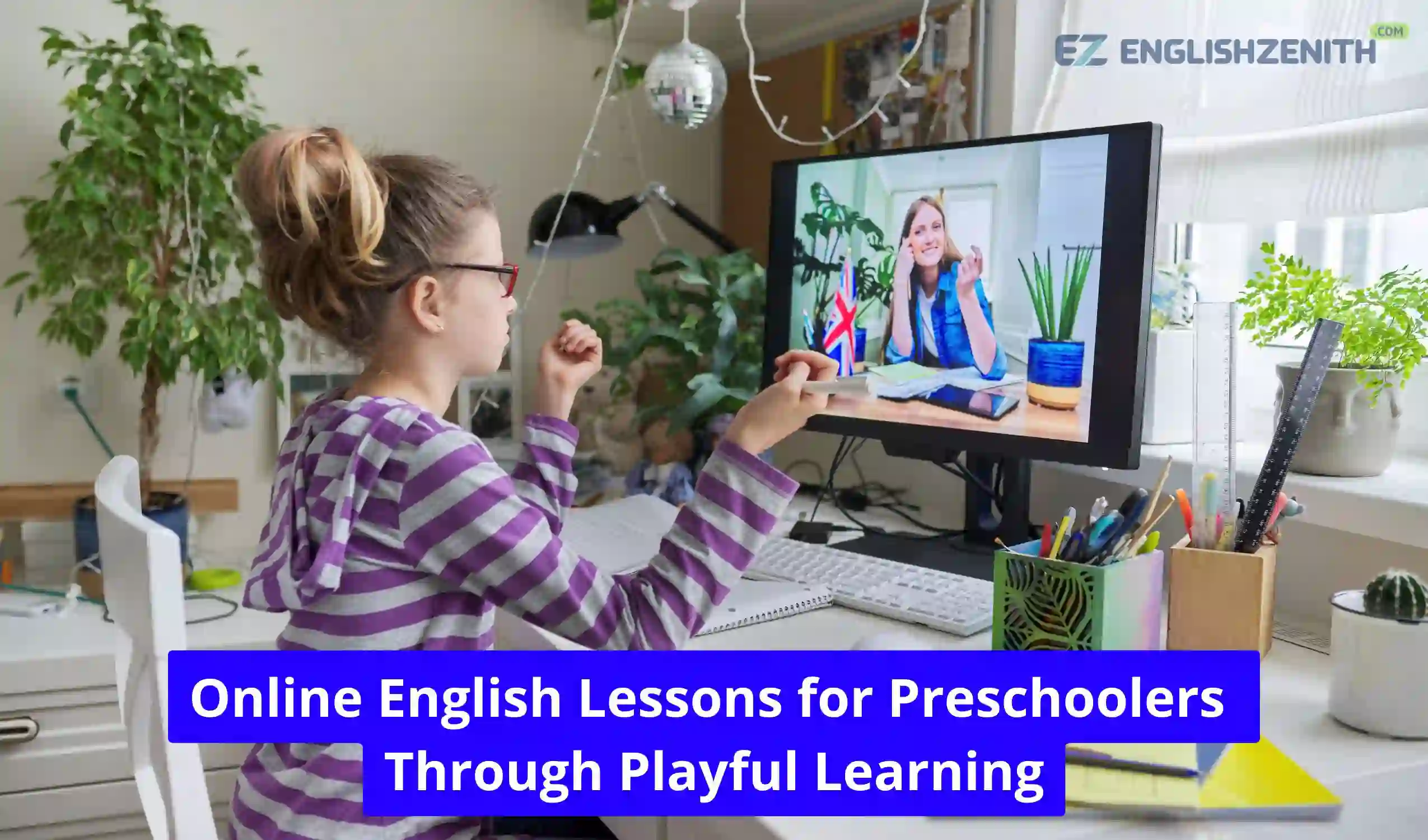
Online English lessons for preschoolers are guided learning sessions that introduce English through digital platforms.
Tutors use video calls, pictures, songs, interactive stories, games, and real objects to help children explore the language in an engaging environment.
Unlike lessons designed for older students, preschool English classes focus on participation rather than lengthy explanations.
Children learn through repetition, observation, movement, and interaction, so tutors need to connect language with activities that make sense to young learners.
For example, a tutor might show pictures of a cat, a dog, and a rabbit. The child can identify each animal, repeat its name, answer a simple question, or choose the correct picture when the tutor mentions it.
As the child becomes more familiar with the vocabulary, the tutor can introduce short expressions such as “I see a cat” or “The rabbit is white.” This gradual approach connects individual words with practical communication.
Families interested in individual instruction can explore an online English tutor to understand how personalised teaching can support different learning needs.
Why Online English Learning Can Benefit Preschool Children
Preschool children learn about the world through exploration and interaction. They observe their surroundings, ask questions, imitate familiar actions, and gradually develop the language they need to communicate.
Online English lessons can build on these natural learning behaviours when tutors design sessions specifically for young children.
Rather than asking preschoolers to watch a screen passively, effective lessons encourage them to respond, move, listen, and experiment with new expressions.
Introducing English Through Familiar Experiences
Children often respond more easily to subjects they already understand. Therefore, tutors can introduce English through familiar topics such as animals, toys, colours, food, family members, and everyday routines.
A child who enjoys playing with toy cars, for instance, might learn words such as car, fast, big, and small. The tutor can then use these words in simple questions, including “Is the car big?” and “Can the car go fast?”
Because the activity connects with an existing interest, the child has a natural reason to participate. Furthermore, the tutor can revisit the same vocabulary through different games, helping the child recognise the words in several contexts.
Creating a Comfortable Learning Environment
Some children speak readily in unfamiliar situations, while others prefer to observe before joining an activity. Online lessons give families an opportunity to create a familiar learning space where children can feel comfortable exploring English.
A favourite toy, a quiet corner, and a predictable routine may help a child settle into the session. However, every child responds differently, so tutors should adjust their approach when a particular activity does not hold the child’s interest.
A supportive tutor allows children enough time to respond. If a child struggles to answer, the tutor can provide a visual clue, demonstrate the activity, or introduce a simpler question.
Building Language Skills Without Unnecessary Pressure
Preschool English learning should encourage curiosity rather than demand immediate performance. Children do not need to memorise long vocabulary lists or understand complicated grammar rules at this stage.
Instead, they can begin by recognising familiar words, following simple instructions, and responding with gestures or short expressions. As their understanding grows, the tutor can gradually introduce more challenging activities.
This gentle progression helps children associate English with communication and discovery. It also allows parents to recognise meaningful progress without expecting immediate fluency.
What Children Learn During Online English Lessons
A balanced preschool English programme develops several connected skills. Listening, speaking, vocabulary, pronunciation, and comprehension all help children understand and use a new language.
Tutors should introduce these skills through activities that match the child’s current ability. Consequently, each lesson can provide useful practice without overwhelming the learner.
Listening Skills and Simple Instructions
Listening provides an important foundation for early language learning. Before children can comfortably use unfamiliar words, they need opportunities to hear those words and understand their meaning.
A tutor might introduce instructions such as “Stand up,” “Touch your nose,” “Open the book,” or “Show me the blue ball.” Children can respond through movement or pointing, even when they cannot yet repeat the full expression.
As their understanding develops, the tutor can combine familiar words in new instructions. For example, “Find the red car” encourages children to recognise both a colour and an object.
These activities help tutors observe comprehension without requiring children to answer every question verbally.
Everyday English Vocabulary
Vocabulary becomes more useful when children connect words with real objects and familiar experiences. Therefore, preschool lessons often explore practical themes that children encounter at home or during play.
Common topics include colours, numbers, animals, body parts, food, clothing, and toys. A tutor can introduce a small group of words through pictures, then revisit them through songs, questions, and interactive games.
For example, a lesson about food might begin with pictures of an apple, a banana, and a sandwich. After identifying each item, the child can practise a simple expression such as “I like bananas.”
Repeated exposure allows children to recognise familiar vocabulary and gradually use it more independently.
Speaking Confidence and Simple Expressions
Speaking activities should begin with manageable expectations. Some preschoolers may start by repeating individual words, while others may already answer questions with short phrases.
A tutor can model useful expressions such as “My name is…,” “I like cats,” “Here you are,” and “Can I have it?” These phrases introduce language that children can use during familiar activities.
Rather than correcting every mistake immediately, the tutor can respond naturally and demonstrate the intended expression. If a child says “Blue car,” for example, the tutor might reply, “Yes, it is a blue car.”
This approach provides a clear example while keeping the interaction positive. Over time, children can gain more opportunities to experiment with longer expressions.
Pronunciation Through Songs and Repetition
Preschoolers benefit from hearing clear pronunciation in meaningful contexts. Songs, rhymes, and short phrases allow them to notice sounds, rhythm, and intonation while enjoying the activity.
A tutor might use an animal song to practise words such as cat, dog, bird, and fish. The child can listen, repeat the words, and connect each sound with a picture.
Some children may find certain sounds more challenging than others. Therefore, the tutor should offer patient guidance and avoid expecting perfect pronunciation after only a few attempts.
Early Reading and Story Comprehension
Picture books introduce language through images, characters, and simple storylines. They also encourage children to listen carefully, recognise familiar words, and connect spoken language with meaning.
During an online story session, the tutor might ask, “Where is the bear?” or “What colour is the balloon?” The child can point to the correct illustration or answer with a single word.
Later, the tutor may invite the child to describe a picture or retell a small part of the story. These activities support comprehension while allowing children to participate at their own level.
How Play Based Online English Lessons Work
Play based learning combines a clear teaching objective with activities that children find enjoyable. Tutors choose games and materials that encourage specific language skills rather than adding entertainment without a learning purpose.
For online lessons, variety matters because preschoolers may struggle to focus on one activity for an extended period. Switching between listening, movement, pictures, and conversation can help maintain interest.
Interactive Picture Games
Picture games make vocabulary easier to introduce and review. A tutor can display several images, ask the child to identify one, and invite them to find a similar object nearby.
For example, a lesson about colours might include a picture of a yellow banana. The tutor can then ask the child to find something yellow at home.
This simple activity connects the screen with the child’s physical environment. It also gives children a reason to move, observe, and use the vocabulary in a new context.
Movement and Action Games
Young children often enjoy activities that involve movement. A tutor can combine English instructions with simple actions such as clapping, jumping, waving, or turning around.
The tutor might say, “Clap your hands” or “Jump like a rabbit” and demonstrate the movement. Children can follow along before trying to recognise the instruction independently.
These games support listening comprehension while adding variety to the lesson. Moreover, movement can help children transition into a quieter activity when the tutor changes the pace.
Songs, Rhymes, and Repeated Phrases
Songs introduce predictable language patterns that children can hear and repeat. Familiar rhythms can make expressions easier to remember, particularly when the words connect with actions or pictures.
A greeting song, for example, can establish a routine at the beginning of each session. The tutor may then introduce another song to practise numbers, animals, or body parts.
Repetition remains useful, but it works best when children encounter familiar language through varied activities. As a result, the same vocabulary can reinforce earlier learning without making the lesson feel monotonous.
Storytelling and Imaginative Play
Stories allow children to explore language through characters and situations. A tutor might use a story about a lost teddy bear to introduce words related to rooms, toys, colours, and locations.
After reading, the tutor can invite the child to help the character find the teddy bear. The child may answer simple questions, choose between pictures, or describe where the toy appears.
This combination of storytelling and participation gives children a meaningful reason to listen and respond. It also allows the tutor to adapt the activity according to the child’s interests.
How Long Should Online English Lessons Last?
The ideal lesson length depends on the child’s age, attention span, energy level, and familiarity with online learning. No single duration works equally well for every preschooler, so parents should look for a format that keeps their child engaged.
A lesson can include several short activities rather than one extended task. For example, the tutor might begin with a greeting, introduce vocabulary through pictures, play a movement game, and finish with a short story.
If the child becomes restless, the tutor can change activities or offer a brief pause. This flexibility helps maintain a positive learning experience while keeping the lesson focused on its objectives.
Parents should also consider how their child responds after a session. A child who participates comfortably may be ready for the current format, while a child who regularly becomes overwhelmed may benefit from shorter sessions or more varied activities.
How to Choose Online English Lessons for Preschoolers
Choosing an appropriate programme involves more than comparing schedules. Parents should consider the tutor’s approach, the quality of interaction, the learning materials, and the way the programme responds to each child’s needs.
Look for a Tutor With a Child Friendly Approach
A tutor should understand that preschoolers need clear instructions, visual support, encouragement, and frequent opportunities to participate. They should also know how to adjust an activity when a child loses interest or struggles to understand.
Parents can ask how the tutor introduces vocabulary and encourages speaking. It is also useful to understand how the tutor handles mistakes, shyness, and differences in attention span.
These questions help families assess whether the programme prioritises communication and development rather than simply completing activities.
Choose Personalised Learning Activities
Children have different interests and starting points. One child may enjoy songs, while another may prefer drawing, animals, puzzles, or imaginative play.
Personalised teaching allows the tutor to use these preferences when planning activities. Consequently, children may find it easier to connect with the lesson and participate more actively.
Families can explore personalised English lessons online to learn how individual needs can shape an English learning experience.
Consider Individual Attention
In a one to one lesson, the tutor can focus directly on the child’s responses, interests, and current abilities. This format can make it easier to adjust the pace and provide additional practice when necessary.
For example, if a child understands animal names but struggles to answer questions, the tutor can focus on simple question and answer activities. Meanwhile, a child who already uses short phrases may benefit from picture descriptions or storytelling.
Parents interested in this format can review one on one English lessons online when considering options for focused learning.
Ask How Progress Is Communicated
Parents need a clear understanding of what their child practises and how they respond to lessons. A tutor should describe areas of progress and identify skills that may need further practice.
Progress does not always appear as longer sentences. A child may first recognise a word, then follow an instruction, and eventually use the same word during a conversation.
Regular communication helps parents recognise these changes and reinforce familiar language at home.
How Parents Can Support Online English Learning at Home
Parents can complement online lessons through simple, enjoyable activities between sessions. They do not need advanced English skills or complicated teaching materials to help children become more familiar with the language.
Use English During Daily Routines
Everyday activities provide natural opportunities to repeat useful expressions. Parents might use phrases such as “Good morning,” “Wash your hands,” “Put on your shoes,” or “Time to eat.”
Because the words connect with familiar actions, children can begin understanding their meaning through context. Over time, they may respond to the expressions or use selected words independently.
Read Picture Books Together
Picture books offer a relaxed way to revisit vocabulary from online lessons. Parents can point to an animal, name a colour, or invite their child to find a particular object.
There is no need to turn reading into a test. Instead, follow the child’s interests and allow them to ask questions, repeat words, or simply enjoy the story.
Encourage Play Without Demanding English
Children may use their first language while playing, and that is a normal part of communication. Parents can introduce familiar English words naturally without insisting that every response must use English.
For example, if a child points to a toy car, a parent can say, “Yes, a car. The car is fast.” This provides an English example while keeping the interaction comfortable.
Celebrate Small Achievements
A child may show progress by recognising a new word, following a familiar instruction, joining a song, or attempting a short phrase. These small steps help parents understand how the child is becoming more comfortable with English.
Positive encouragement can make children more willing to try again. Therefore, recognise effort and curiosity rather than focusing only on accuracy.
Common Mistakes to Avoid in Online Preschool English Classes
Online lessons can become frustrating when activities do not match a child’s needs. Fortunately, a few thoughtful adjustments can make the learning experience more supportive.
One common mistake is expecting children to sit still and listen throughout an entire session. Preschoolers often need movement, visual variety, and opportunities to respond, so tutors should include different types of activities.
Another mistake is introducing too many unfamiliar words at once. A smaller vocabulary set gives children more opportunities to recognise and practise each word before moving forward.
Parents and tutors should also avoid correcting every error immediately. Constant interruptions may make children reluctant to speak, especially when they are still building confidence.
Finally, families should avoid comparing progress with that of other children. Each learner develops at a different pace, so a more useful approach involves observing individual changes in understanding, participation, and communication.
How to Recognise Progress in Online English Lessons
Progress often begins with understanding rather than speaking. A child who follows an instruction, identifies a familiar picture, or responds to a greeting may already be developing important early language skills.
Over time, parents may notice that their child recognises more vocabulary or participates more willingly during lessons. Some children may begin using familiar English expressions during play, while others may first demonstrate progress through gestures and listening.
Tutors can help families interpret these changes by explaining which skills the child practises and what they can try next. This guidance makes it easier to support learning without placing unrealistic expectations on the child.
Consistency also matters. Short opportunities to hear and use English between lessons can reinforce familiar expressions and help children maintain contact with the language.
Frequently Asked Questions About Online English Lessons for Preschoolers
Are Online English Lessons Suitable for Preschoolers?
Yes, online lessons can suit preschoolers when tutors use interactive, age appropriate activities. Stories, songs, picture games, movement, and simple conversations can help children participate actively rather than watch a screen passively.
What Do Preschoolers Learn in Online English Classes?
Children may learn everyday vocabulary, greetings, simple instructions, listening comprehension, pronunciation, and basic expressions. Some programmes also introduce picture books and early language activities that support comprehension.
Can a Child Learn English Without Knowing Any English?
Yes. Beginners can start with familiar objects, pictures, gestures, and simple instructions. A supportive tutor can introduce vocabulary gradually and give the child time to understand before expecting independent responses.
How Often Should Preschoolers Take Online English Lessons?
The suitable schedule depends on the child’s needs, family routine, and ability to participate comfortably. Regular practice can support familiarity, but parents should prioritise a sustainable routine over an overly demanding schedule.
Do Parents Need to Stay During Online English Lessons?
The level of parental involvement depends on the child’s age, confidence, and comfort with technology. Some children can participate independently for parts of a session, while others benefit from an adult nearby to provide practical support.
How Can Parents Know Whether Lessons Are Working?
Look for changes in listening, vocabulary recognition, participation, and willingness to use familiar expressions. A child may show progress by following instructions or recognising words before speaking more independently.
What Makes a Good Online English Tutor for Preschoolers?
A good tutor uses clear language, playful activities, patience, and age appropriate teaching methods. They also adapt the lesson to the child’s interests and communicate with parents about progress and learning goals.
Help Your Child Enjoy Learning English From Home
Online English lessons for preschoolers can create an enjoyable introduction to language when tutors combine personalised guidance with stories, games, movement, and meaningful communication.
The aim is to build familiarity and confidence gradually while respecting each child’s learning pace.
Every child brings different interests and abilities to the learning experience. Therefore, a suitable programme should encourage curiosity, recognise small achievements, and help children associate English with positive everyday experiences.
If you would like to explore personalised English learning for your child, contact English Zenith to discuss suitable lesson options.
Discover an engaging learning experience that supports early communication and makes English a natural part of your child’s learning journey.
Related Articles
Personalised English Lessons Online
One on One English Lessons Online